





The engagement ring is more than just a piece of jewelry – it is a symbol of love, promise, and a shared future. But after the emotional moment of the proposal, the question arises: on which hand is the engagement ring worn? The answer varies depending on culture, tradition, and personal preferences. In this article, we will explore historical meanings, cultural differences, and current trends, so that you can make the choice that is right for you.
1. The origin of the engagement ring tradition
The tradition of the engagement ring has its roots in Ancient Rome and Egypt. The Romans believed in the existence of the “Vena Amoris” – the vein of love – which was thought to run directly from the ring finger of the left hand to the heart. This romantic belief gave rise to the custom of wearing the ring on this finger, symbolizing that love was directly connected to the heart.
In Ancient Egypt, the circle of the ring symbolized eternity, while the empty center represented the gateway to the future. From then on, the idea of offering a ring as a promise of a shared life spread to many cultures.
2. On which hand is the engagement ring worn in Romania?
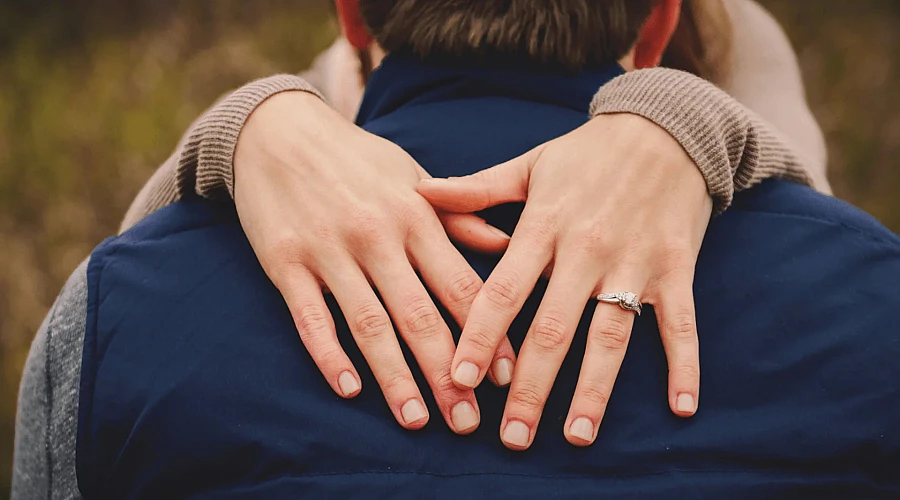
In Romania, the predominant tradition is to wear the engagement ring on the left hand, on the ring finger, before marriage.
After the wedding, there are two popular options:
-
Moving the ring to the right hand, next to the wedding band.
-
Keeping the engagement ring on the left hand and wearing the wedding band on the right (less common).
Although tradition is strong, in recent years many couples have chosen to wear both rings on the same hand, creating a harmonious set.
3. Cultural differences: how the engagement ring is worn around the world
Countries where it is worn on the left hand
In most Western European countries and North America, the engagement ring is worn on the left hand:
-
USA
-
Canada
-
France
-
Italy
-
United Kingdom
-
Ireland
-
Australia
-
Mexico
The main reason: the tradition of the “Vena Amoris” and the association of the left hand with the heart.
Countries where it is worn on the right hand
In other cultures, the right hand is considered the “hand of honor” or the “hand of oath.” In these countries, the engagement ring is worn on the right hand:
-
Russia
-
Greece
-
Poland
-
Germany
-
Norway
-
Bulgaria
Countries with mixed traditions
In some places, the choice depends on region or religion:
-
Brazil – fiancés wear the ring on the right hand until the wedding, then move it to the left.
-
Spain – in Catholic regions it is worn on the right, while in Protestant regions on the left.
4. The significance of the ring finger
Regardless of the hand, the ring finger is the most popular for the engagement ring. In many cultures, it symbolizes:
-
Eternal love – the circle of the ring has no beginning or end.
-
Connection to the heart – the tradition of the “Vena Amoris.”
-
Commitment and promise – wearing it on a finger dedicated exclusively to love.
5. What happens to the engagement ring after the wedding?
There are several options:
-
Keeping it on the same hand as the wedding band – usually, the wedding band is placed first (closer to the heart), followed by the engagement ring.
-
Moving it to the other hand – a practical choice for those who prefer not to wear both together.
-
Occasional wear – some people wear the engagement ring only on special occasions, to protect it from scratches.
6. Personal choice matters more than tradition
Although traditions are charming, how you wear the engagement ring is above all a matter of comfort, style, and personal emotion.
In modern times, many people choose:
-
The hand that feels more comfortable.
-
The hand on which they wear fewer other rings.
-
Arranging rings according to design – some engagement and wedding ring sets are created to be worn together.
7. Tips for wearing the ring with elegance and safety
-
Choose the right size – a ring that is too loose or too tight can be uncomfortable.
-
Remove it during strenuous activities – to avoid damaging the stone or the setting.
-
Clean it regularly – to maintain its sparkle (you can use professional solutions or gentle methods at home).
-
Insure it – if the ring is of high value, insurance can bring peace of mind.
8. Valmand – the place where you find the ring that tells your story
At Valmand, we believe that every love story deserves a unique ring, crafted with care and passion. Whether you wear it on the left or right hand, what matters most is that the ring reflects your personality and the bond between you.
Our collections include engagement rings in white, yellow, or rose gold, with diamonds and carefully selected precious stones – a symbol made to last a lifetime.
Conclusion
There is no universal rule when it comes to which hand the engagement ring should be worn on. Traditions differ, and the final choice is yours. What truly matters is the symbol of love you wear and the memory of the moment it was given to you.


